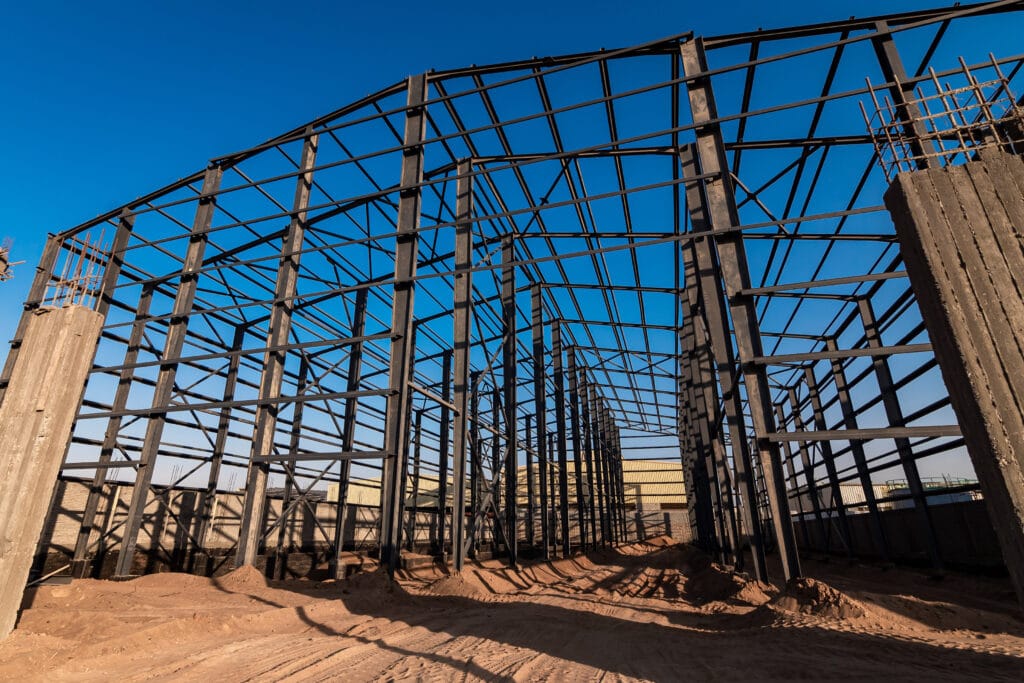
Amidst the rapid urban development witnessed globally, General Contracting stands out as one of the most vital sectors. It is not merely a process of building and construction but a key engine driving the wheel of economic and social development in any advanced economy. There is increasing confusion about what exactly General Contracting is and the pivotal role these companies play in transforming engineering visions on paper into a tangible reality.
This comprehensive and in-depth article will take you on a professional journey to understand the legal entity of the General Contractor, its integrated function, how it differs from a specialized contractor, leading up to its strategies and goals that contribute to achieving sustainable development. A deep understanding of General Contracting is the first step to ensuring the success of any construction project, whether residential, commercial, or even massive infrastructure projects.
What is the Meaning of General Contracting?
General Construction Companies are defined as firms or institutions specializing in the overall execution and management of construction projects, without being limited to one specific field. These entities are licensed to execute the entire project, starting from the excavation and foundation stage, all the way to finishes, mechanical and electrical installations, and final project handover.
Essentially, General Contracting companies assume comprehensive management and execution responsibility, including coordinating construction operations from planning and design to the final project delivery. These companies are characterized by possessing significant capabilities to execute all project stages and rely on teams of experts and specialists in multiple fields.
At its core, the General Contractor is the undertaking entity responsible for supervising and following up on the work team, and effective communication with the relevant parties for the construction project. General Contracting is considered the primary tool for achieving the desired objectives of the construction and building process.
Illustrative examples of the role of a General Contracting company like Al Salmouni Group:
Infrastructure Projects: General Contracting companies undertake the execution of major infrastructure projects such as the construction of roads, bridges, dams, water and sewage networks, and factories.
Integrated Projects: Includes the complete execution of projects, whether full finishing, construction works, or infrastructure.
What are the Types of General Contracting?
The fields of work and specializations of General Contracting companies vary, enabling them to meet different market needs. The types of General Contracting can be classified based on the nature of the projects they execute:
A. Building and Construction Contracting:
General Contracting for Residential Building: Specialized in constructing residential buildings, including villas, multi-story apartment buildings, and residential complexes.
General Contracting for Commercial Building: Undertakes the execution of commercial projects such as malls, commercial centers, administrative buildings, and hotels.
General Contracting for Engineering Construction: Focuses on the execution of large and massive projects, such as high-rise buildings (towers).
B. Infrastructure and Utilities Contracting:
Roads, Bridges, and Infrastructure Contracting: Specializes in the construction and development of essential infrastructure, including roads, bridges, tunnels, sewage networks, and water, electricity, and communication lines.
Environmental Contracting: Includes projects such as water and wastewater treatment plants.
C. Industrial and Specialized Contracting:
Industrial Projects Contracting: Includes the construction and maintenance of factories, warehouses, large industrial facilities, and power plants.
Electromechanical Works (MEP): An essential part of the General Contractor’s work, covering the installation and maintenance of air conditioning and ventilation systems, lighting, electrical power, elevators, generators, and water/sewage networks.
D. Maintenance and Support Works:
Restoration and Maintenance Contracting: Works on periodically renovating and repairing old buildings and infrastructure to ensure their safety and continuity of operation, including restoration works.
Demolition and Removal Works: Includes the dismantling and demolition of old structures in preparation for redevelopment.
What is the Difference Between Contracting and General Contracting?
The fundamental difference between the terms “Contracting” (often referring to a specialized or subcontractor) and “General Contracting” lies in the scope of work, project size, and the degree of service integration.
| Comparison Aspect | Contracting (Specialized Contractor) | General Contracting (General Contractor) |
| Scope of Work | Focuses on a specific part of the project, such as plumbing, electrical works, painting, or finishing. | Manages the entire project from start to finish (A-Z), covering all execution phases from design to handover. |
| Project Size | Handles small or medium-sized projects. | Handles large and complex projects such as residential cities, commercial complexes, or massive infrastructure projects. |
| Specialization | Specialized in a specific field such as concrete, installations, or insulation. | Possesses multidisciplinary teams (engineering, management, field operations), and is legally permitted to contract with subcontractors to execute specialized works under its management and supervision. |
| Legal Requirements | May suffice with a simple commercial registration and a specific license in one activity. | Obtains a comprehensive license that allows it to execute the entire project. Legally required to provide higher capital, a higher professional classification, licensed engineers, documented large-project experience, and financial insurance/guarantees. |
| Primary Role | Executing precisely defined technical works. | General management of the project and the intermediary between the owner and the contractors. |
In short, General Contracting is the entity that manages and coordinates all the moving parts in a large construction project, while Specialized Contracting executes specific parts under the supervision of the General Contractor.
What is the Function of the General Contractor?
The General Contractor or undertaking entity assumes the general management of all aspects of the construction project, from office planning to field supervision. The General Contractor is the primary point of contact between the project owner and all involved parties (vendors, subcontractors, and other stakeholders).
The functions of the General Contractor can be divided into three crucial phases:
A. Pre-Construction Phase Responsibilities:
This phase involves establishing the administrative and technical foundations for the project:
Budgeting: Creating the detailed construction budget and managing costs.
Planning and Design: Collaborating with the architect and consultant to ensure the desired design is achieved.
Resource Management: Appointing specialized contractors (subcontractors) to complete specialized tasks.
Contracting and Supply: Contracting with key suppliers and vendors for materials.
B. Execution Phase Responsibilities (During Construction):
During construction execution, the General Contractor’s role is to ensure that work proceeds efficiently and with high quality:
Site Organization and Management: Effectively organizing and managing the work site.
Scheduling: Creating and managing the construction schedule and ensuring the project stays on time.
Supervision and Quality: Supervising construction works according to contract specifications, inspecting construction quality, and coordinating the timing of specialized contractors.
Safety and Security: Assisting in implementing safety procedures on site.
Labor Coordination: Providing field management for labor.
C. Post-Construction Phase Responsibilities (Delivery):
Even after construction is complete, the General Contractor remains responsible for finalizing the administrative and financial aspects:
Final Handover: Completing the construction and handing it over to the owner according to the planned schedule and budget.
Payment Management: Settling payments to specialized contractors and vendors, and ensuring subcontractors are paid for their work.
Documentation and Guarantees: Collecting and tracking any mortgage waivers, and ensuring work completion according to specifications before disbursing payments.
Maintenance: May include maintenance and support services after handover to ensure the project performs at the highest levels of continuity.
In summary, the General Contractor manages all the moving parts of the project, assuming a crucial administrative role to ensure the project is completed efficiently and with quality.
What are the Goals of a General Contracting Company?
The goals of General Contracting companies extend beyond merely achieving profit to include strategic roles in urban, economic, and social development.
A. Economic and Developmental Goals:
Supporting Economic Growth: General Contracting is an engine for development. It contributes to increasing the GDP through the execution of major projects, and helps develop and advance the economy.
Creating Wide Employment Opportunities: Contracting relies on large numbers of specialized and skilled labor, providing direct and indirect job opportunities in various fields.
Attracting Investment: This sector plays a vital role in attracting foreign and local investments, which strengthens economic growth and improves the level of global competition.
B. Execution and Quality Goals:
Comprehensive and Integrated Execution: Aims to provide comprehensive and integrated solutions for clients’ needs in the field of building and construction, ensuring project execution with the highest quality and on time.
Adherence to Standards: Ensuring compliance with all local and international legislation and laws related to building and safety, and adhering to high engineering standards and specifications.
What are the Types of General Contracting Contracts?
Construction contracts are the legal framework that governs the relationship between the General Contractor and the project owner. Contracts are classified based on client preferences, project nature, and the degree of certainty regarding costs.
Here are the main types of General Contracting contracts:
A. Lump-Sum Contract (Fixed Contracts):
Definition: This contract sets a fixed, total price for the entire project. This price includes all costs for materials and time, regardless of emergent problems or changes.
Advantage: This type of contract provides significant protection to the owner from unexpected cost changes and delays.
Expert Notes: Contractors may add an extra percentage to compensate for the high risks they bear under this contract. The owner can also offer incentives to the contractor for early project completion.
B. Cost-Plus Contract:
Definition: This contract consists of two main parts: a predetermined fee (paid to the contractor as profit or overhead) and the actual accumulated costs of the project. The fee may be a fixed amount or a percentage of the total project cost.
Advantage: It is characterized by recording expenses as they occur, instead of deducting them from a set budget.
Usage: This type is used when project costs are uncertain or when the scope of work is initially unclear.
Expert Notes: This type of contract often includes incentives for contractors to stay under budget, in addition to maximum spending limits to avoid disputes.
C. Time and Materials Contract (T&M):
Definition: Suitable when the project scope is not fully known. Under this contract, the contractor charges an hourly fee for labor and the cost of materials as needed.
Usage: Suitable for small projects that require precise supervision, as monitoring becomes more difficult with increasing project size.
Advantage: The main advantage of this contract is that it protects the owner from overpaying the contractors.
Conclusion:
Data and experience confirm that General Contracting represents an essential, indispensable pillar in the construction and building sector. It not only builds structures and facilities but is the foundation upon which the economic and social structure of any country rests.
Through its comprehensive role in managing major projects, coordinating specializations, and ensuring quality, General Contracting companies ensure the effective and efficient achievement of urban development goals. Thanks to its continuous adoption of modern technology and commitment to sustainability, the future of this sector is heading towards more prosperity and innovation.
If you are preparing to execute your next project, whether residential or a massive investment, the professional selection of an experienced and reliable General Contracting company like Al Salmouni Group is your most important decision. Start now to search for a construction partner that possesses comprehensive competencies and commitment to all legal and technical standards. Contact experts today to ensure your vision is transformed into a tangible reality with the highest levels of quality and on time.